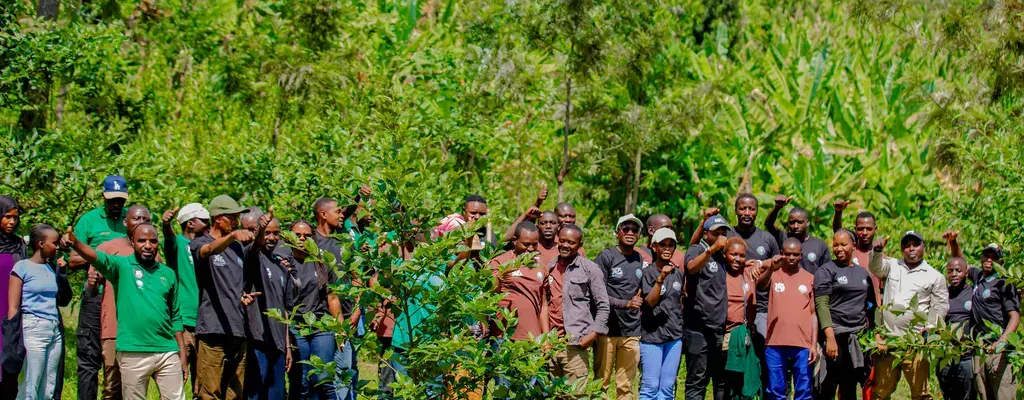
From April 20-24, 2026, restoration practitioners, government agencies, faith-based organizations, and research institutions gathered in Rubavu and Rutsiro Districts, Rwanda, for a Peer-to-Peer exchange learning event that demonstrated a powerful truth: effective landscape restoration starts with shared knowledge, local leadership, and practical action.
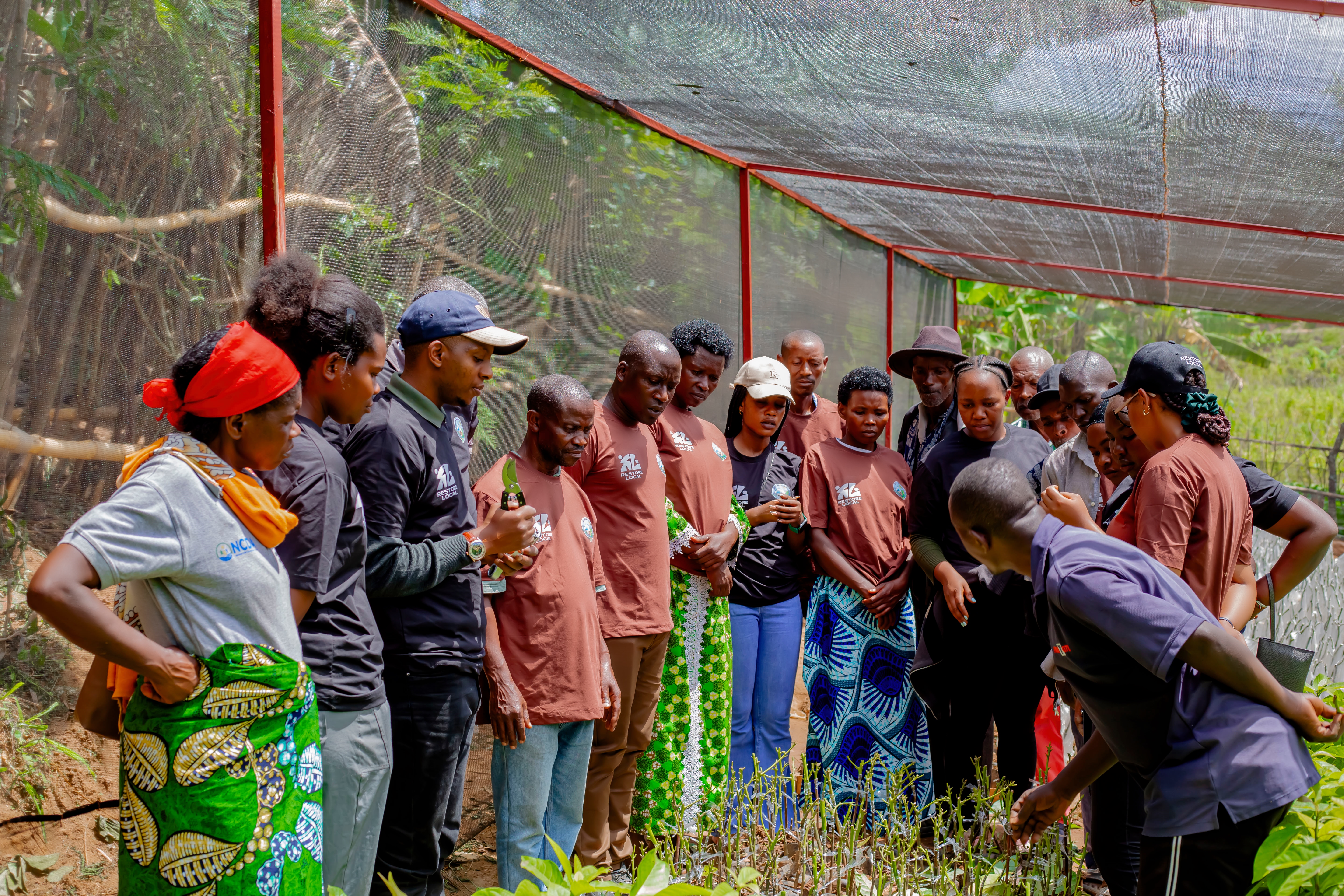
Hosted through a field-based learning visit to the Organisation for Support to Environmental Protection and Climatic Change Adaptation (OSEPCCA) tree nursery in Boneza Sector, Rutsiro District- Rwanda, the exchange brought restoration theory to life- connecting policy, practice, and people.
Why Peer-to-Peer Learning Matters for Restoration at Scale
Across Africa, ambitious restoration commitments- from the African Forest Landscape Restoration Initiative (AFR100) to national land-use strategies- depend not only on finance and policy, but on locally rooted capacity. Peer-to-peer learning platforms like this one provide:
- A practical bridge between national strategies and community led restoration implementation
- Opportunities for local governments to exchange directly with practitioners
- Spaces to see tangible, scalable impact at the grassroots level
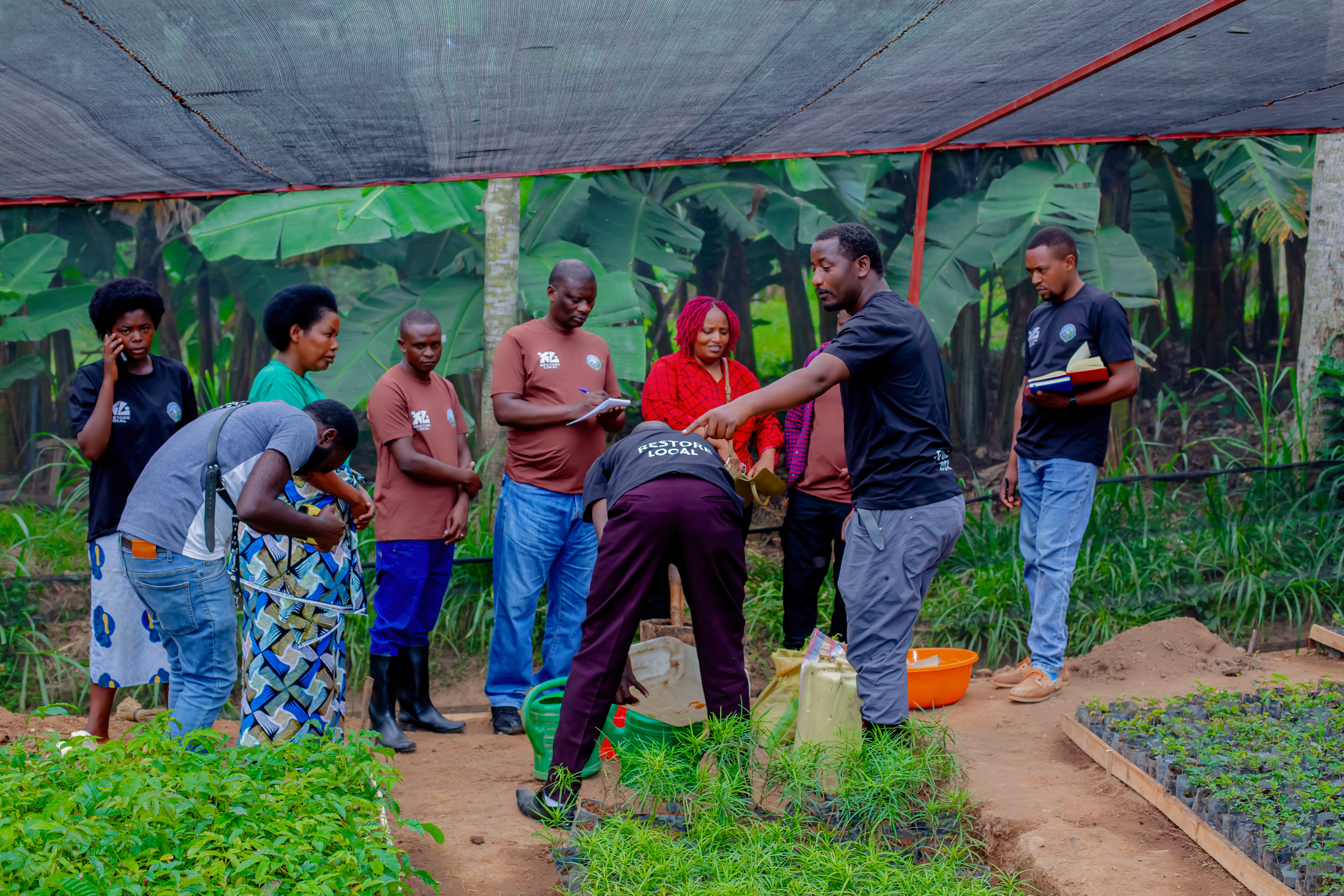
This learning exchange convened representatives from: APEFA, BIOCOOR, Initiative pour la Promotion de la Famille et du Genre (IPFG), Centre intervention et d’Action Communautaire (CIAC), Forest of Hope Association (FHA), Friends of Environment and Social Development (FESD), Mouvement pour Christ au Rwanda (MPCR), Rural Development Initiative (RDI), Rwanda Climate Change and Development Network (RCCDN), Resilient Builders Initiative, Green for Life Rwanda, Rural Development Interdiocesan Service (RDIS), Wildlife Conservation Initiative (WCI), Youth in Agroecology and Business Learning Track Africa (YALTA), FDINDA, and PROMACNUTS LTD. Also in attendance were representatives from Rubavu, Rutsiro and Rusizi districts, the Rwanda Forestry Authority (RFA), CIFOR-ICRAF, and supporting teams from WRI and VIA Foundation. Together, they explored how locally managed nurseries can supply quality seedlings, improve farmer livelihoods, and strengthen ecosystem resilience.
Inside the Learning Visit: Practical Skills for Long-Term Impact
The OSEPCCA nursery in Nyakabanda site serves as a hub for raising diverse tree seedlings distributed to partner farmers across Boneza Sector in Rutsiro District of Rwanda. During the visit, participants engaged hands-on with every stage of the restoration value chain.
Native and High-Value Tree Species
Participants learned propagation and management techniques for key native and multipurpose species, including:
- Maesopsis eminii
- Croton megalocarpus
- Entandrophragma excelsum
- Podocarpus falcatus
- Carapa grandiflora
These species play a critical role in soil stabilization, biodiversity recovery, climate adaptation, and local income generation.
Key Skills Shared During the Exchange
- Seed Preparation and Nursery Management: Participants practiced selecting high-quality seeds, proper drying methods, and soaking techniques—particularly for Maesopsis eminii- to improve germination and survival rates.
- Pot Filling and Sowing Techniques: Facilitators demonstrated systematic pot preparation, correct sowing depth, and early-stage care to ensure healthy seedlings.
- Organic Inputs for Sustainable Production: The group learned how to produce organic fertilizers and natural pesticides using locally available materials such as chili and garlic- reducing costs while protecting soil and water systems.
- Grafting Hass Avocado Seedlings: As an example of linking restoration with livelihoods, participants exchanged skills on grafting Hass avocadoes- combining high-value crops with tree-based restoration approaches.
Collaboration as a Catalyst for Scaled Restoration
One of the strongest outcomes of the exchange was the cross-partners dialogue it enabled. Local government representatives observed how community nurseries can complement district restoration plans. NGOs and research institutions shared technical insights. Partners saw first-hand how small, targeted investments translate into durable impact.
The visit reinforced that land restoration succeeds when communities lead and institutions support. It also showcased why local knowledge exchange accelerates adoption of best practices. In addition, it underlined that integrated approaches deliver environmental, social, and economic returns.
Experiences like this in Peer-to-Peer exchange highlight a scalable model for Africa’s restoration future: