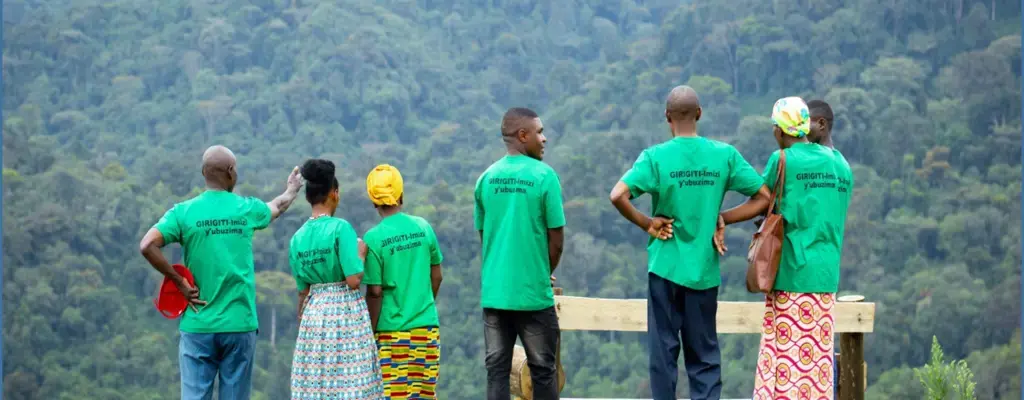
By Christian Mushimiyimana | Landscape Restoration Projects Manager | Forest of Hope Association. This blog is also published on FHA website.
When Christian Mushimiyimana traveled to Nyabihu District for the Restore Local’s Peer-to-Peer (P2P) Workshop in December 2025, he thought he was going to learn new techniques for planting trees. He returned with something far more powerful: a new understanding of what it takes to restore landscapes at scale.
As Landscape Restoration Projects Manager at the Forest of Hope Association, Christian had long viewed restoration through a familiar lens: raising seedlings, planting trees, and helping degraded land recover. But during three days of exchanges with fellow restoration champions, practitioners, and mentors, he discovered that successful restoration extends beyond what happens in the ground. It depends on people, partnerships, and the continuous exchange of knowledge.
“Before participating in the Peer-to-Peer Workshop, I understood landscape restoration primarily as tree planting. However, the program transformed my perspective,” Christian recalls. “I realized that tree planting alone is not enough; meaningful community engagement and improving people’s livelihoods are essential for achieving successful and sustainable landscape restoration.”
His experience illustrates the true value of peer-to-peer learning: when restoration champions come together to share what works, knowledge travels across landscapes, organizations, and communities- creating impacts that benefit nature, people, and climate.
Learning from Peers, Transforming Practice
The TerraFund Peer-to-Peer Workshop was designed as a learning exchange where restoration champions act as both teachers and learners. Participants shared practical experiences in restoration techniques, nursery management, agroforestry, monitoring, and community engagement, drawing directly from challenges they had encountered in the field.
For Christian, these exchanges quickly translated into action.
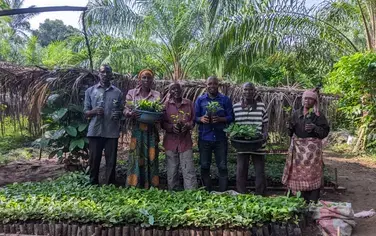
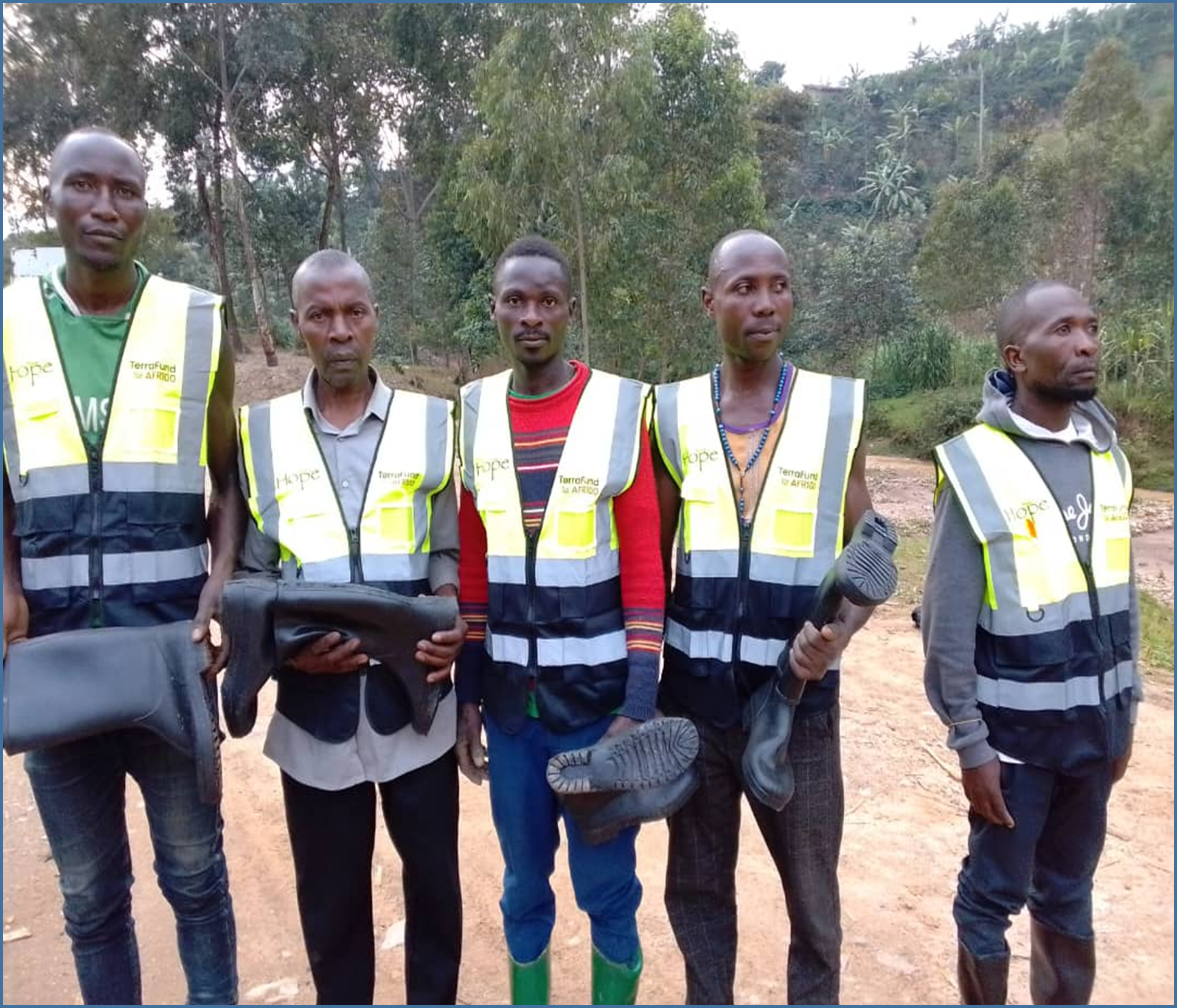
One lesson that stood out came from fellow restoration champions who emphasized the importance of long-term tree stewardship. Inspired by these discussions, Forest of Hope established a network of five focal persons, or tree stewards, responsible for protecting and monitoring trees planted along riverbanks. The approach strengthened ownership at the community level and improved the survival prospects of newly planted trees.
But the learning did not stop when workshop ended.
The relationships forged during the event evolved into an ongoing mentorship network. Christian remained in close contact with restoration champions from the Biodiversity Conservation Organization (BIOCOOR) and the Organization for Support to the Environment Protection and Climate Change Adaptation (OSEPECCA), who continued to share practical advice long after participants returned home.
“One day, Jean D’amour from OSEPECCA called me and explained that holistic restoration is more effective and cost-efficient than scattered planting,” Christian says. “We applied this approach, and it worked very well.”
That single phone call demonstrates how peer learning extends beyond workshops. A lesson shared between restoration champions can influence decisions on the ground, improving restoration outcomes far beyond the original learning event.
How Knowledge Travels
Another important lesson came from BIOCOOR’s experience engaging communities in restoration initiatives. Convincing farmers to plant and care for indigenous tree species can sometimes be challenging, particularly when communities prioritize species that offer immediate economic benefits. Through mentoring conversations, Christian learned a practical approach to overcoming this challenge.
“Irene from BIOCOOR taught me that positive incentives work better than persuasion,” Christian explains. “Give beneficiaries the tree seedlings they prefer, include a few indigenous species you want them to care for, and reward those who successfully maintain them.”
Forest of Hope adopted these lessons and incorporated them into its restoration activities. What began as knowledge held by one organization became knowledge applied by another- an example of how peer learning accelerates the spread of effective restoration practices.
This is how restoration scales: not only through more trees planted, but through ideas shared, tested, adapted, and improved by practitioners working across different landscapes.
From Learner to Mentor
Perhaps the strongest evidence of peer learning’s impact is that Christian and Forest of Hope did not remain beneficiaries of knowledge for long. They became contributors to the learning network themselves.
Building on its expertise in Monitoring, Reporting, and Verification (MRV), Forest of Hope Association provided valuable mentorship to the Rwanda Rural Rehabilitation Initiative (RWARRI), enabling the organization to strengthen its technical capacity in polygon mapping and editing. At the time, RWARRI was experiencing significant technical challenges that constrained the implementation and reporting of its restoration activities.
“Before receiving mentorship from the Forest of Hope Association, polygon mapping and editing were major challenges for our team. Their practical guidance enabled us to successfully map and submit 303.2 hectares for approval by WRI. More importantly, the peer-to-peer learning sessions enhanced our confidence and equipped us with the skillsneeded to independently manage these processes and implement our restoration activities more effectively,” said Viateur BIZIMANA, Project Manager at RWARRI.
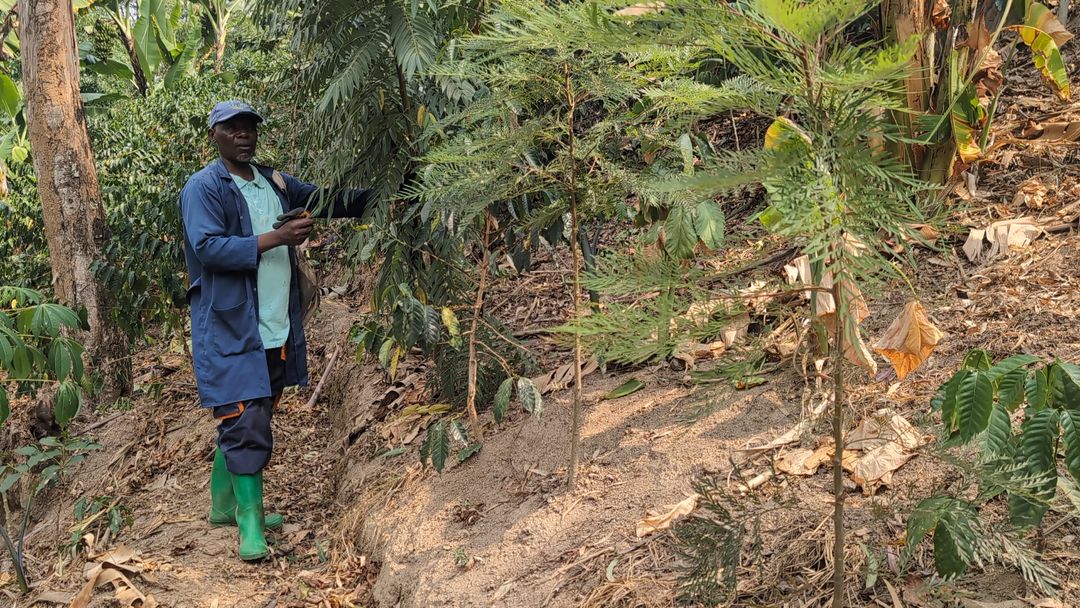
The peer-to-peer learning experience also inspired RWARRI to strengthen community participation in restoration efforts. Following the mentorship sessions, RWARRI established Incuti z’Ibidukikije (Friends of the Environment), consisting of five members at each of the six restoration sites. These community groups are responsible for monitoring the status of planted trees, raising awareness on environmental protection, and preventing damage caused by domestic animal grazing, thereby contributing to the long-term sustainability of the restoration interventions.
In addition, RWARRI introduced an incentive scheme under which landowners receive 25 Rwandan francs for each tree that reaches a growth stage at which it is less vulnerable to damage from people or domestic animals. This initiative has strengthened farmers’ sense of ownership and attachment to planted trees, encouraging them to invest more effort in tree protection and maintenance. As a result, RWARRI expects this approach to contribute significantly to improving tree survival rates across the restoration sites.
The story highlights an important principle: peer learning creates a multiplier effect. Knowledge gained by one restoration champion does not stop with them. It spreads outward, empowering others and strengthening restoration efforts across entire landscapes.
Today, the lessons Christian gained through peer learning continue to shape how Forest of Hope Association works with communities in the Gishwati-Mukura landscape. The organization has strengthened partnerships, improved restoration practices, and increased its focus on community engagement and long-term stewardship.
For Christian, the greatest lesson is that restoration is not simply about recovering degraded ecosystems.
“Landscape restoration is not only about restoring degraded land,” he reflects. “It is also about restoring livelihoods, strengthening partnerships, and building hope within communities.”
His journey, from participant, to learner, to mentor demonstrates why peer-to-peer learning is emerging as one of the most effective tools for scaling land restoration. When restoration champions share experiences openly, solutions spread faster, innovation grows, and communities benefit from approaches that have already been tested in the field.
The result is a ripple effect that reaches far beyond a single workshop: healthier landscapes, stronger communities, and a growing network of restoration champions working together to build a more resilient future for people, nature, and climate.